Provider Communication 012

Content
- Medical Frailty Exclusion Policy
- 2026 Perception of Care Survey
- Request for Application: Adolescent Perinatal Residential Program
- Key Updates to NC Medicaid Clinical Coverage Policy 10A, Outpatient Specialized Therapy Services
- Transition to American Medical Association Maternity Current Procedural Terminology 2027 Code Changes Effective Jan. 1, 2027
- Innovations Direct Care Workers rate increase
- Provider Reverification Application Reminders
- Unannounced Site Visits Effective October 1, 2026
- Trillium’s Provider Access API
- State-Funded FY25/26 Timely Filing Cutoff
- NC Medicaid is Changing - What Providers Need to Know
- Tailored Plan/PIHP Provider Manual
- Important Update: Pregnancy Risk Screening Submissions
- Join Trillium’s Global Quality Improvement Committee
- Roadmap 2 Ready - September 2026
- Trillium Advantage Program Updates
- Peer Support Clinical Coverage Policy 8G Change
- 2026-2027 National Core Indicators I/DD Survey
- Guilford County Detention Center RFA
- Employer of Record (EOR) Compliance
- NC Innovations Waiver Individual and Family Directed Services (IFDS) – Employer of Record (EOR) Annual Monitoring – Monitoring Tool Update
- Residential Treatment Providers Site-Level Changes
- Updated Reminder: Requirements for Research-Based Behavioral Health Treatment Service Delivery—August 31, 2026
- Updated 1915(i) Assessment and Companion Guide Now Available
- Network Providers: Monitoring NCTracks Communication
- Requirement Changes to In Lieu of Service (ILOS)
- All Residential Treatment Providers Authorization Changes
- Provider My Learning Campus Reminder
- Need to Report Fraud, Waste, and Abuse?
Medical Frailty Exclusion Policy
The following documents are open for public comment:
- Medical Frailty Exclusion Policy NCDHHS Provider Attestation (Draft) NC Medicaid Medically Frail Codes (Draft)
Providers can review and comment on these documents on the NC Medicaid Division of Health Benefits Proposed Medicaid Policies page. The comment period closes on November 5, 2026
2026 Perception of Care Survey
The 2026 Perceptions of Care Survey administration period has officially closed on September 23, 2026. Thank you to each provider who supported members in completing the survey. We greatly appreciate your time, dedication, and continued collaboration. We would also like to thank everyone who attended our new POC Office Hours this year. We hope you found the sessions helpful and hope to see more providers attend next year. Once we receive the data from the State, we will share the results on our website so you can see the impact of your contributions. We are truly grateful for your partnership and continued support. If you have any questions related to the surveys, please don't hesitate to reach out to us at Surveys@TrilliumNC.org. Until next year's POC Survey, thank you for all that you do!!
Request for Application: Adolescent Perinatal Residential Program
Trillium Health Resources is seeking applications from qualified nonprofit organizations to develop and operate a gender-responsive, trauma-informed residential substance use disorder (SUD) treatment program specifically designed for pregnant and parenting adolescent females. The program is intended to address a significant service gap for adolescents who require a 24-hour structured residential level of care while also addressing pregnancy, parenting, infant/child development, education, family relationships, and transition to community-based recovery.
Timeline
(Timelines are subject to change)
- RFA Distribution: October 5, 2026
- Deadline for Questions: October 24, 2026
- RFA Deadline: November 6, 2026
Key Updates to NC Medicaid Clinical Coverage Policy 10A, Outpatient Specialized Therapy Services
Telehealth Updates
One key update is the availability of occupational therapy (OT) and physical therapy (PT) telehealth service delivery for select service codes, with updated Outpatient Specialized Therapy (OST) telehealth and discharge criteria. The updated telehealth language was developed in consideration of Session Law 2025-64 (House Bill 546), research and stakeholder feedback.
OST telehealth criteria are in Subsection 3.1.1 of Clinical Coverage Policy (CCP) 10A. Current Procedural Terminology (CPT) codes that may be provided via telehealth service delivery are indicated in Attachment A., Section C. Codes.
Standard of Care Requirements
NC Medicaid beneficiaries shall receive high-quality care aligned with best practices for telehealth service delivery and may request in-person services at any time.
If a provider cannot meet the same standard of care as in-person services with telehealth service delivery, or if in-person services cannot be accommodated upon beneficiary request, the beneficiary must be discharged. At discharge, the therapist shall identify indicators for potential follow-up care or referral (Subsection 3.2.1.9).
Removal of Same-Day Local Education Agency and OST Service Restrictions
The other key change is the removal of language that precluded same day service delivery when OST services are also provided by a local education agency (LEA). This update complies with federal regulations 34 Code of Federal Regulations (CFR) 300.154 and IDEA: PL 108-446.
Non-Substantive Policy Updates
All sections and attachments are updated with non-substantive changes such as:
- Grammatical corrections
- Template language
- Style guide alignment
- Clarity enhancements
- Billing and compliance reminders
All claims must comply with the Medicaid National Correct Coding Initiative (NCCI). Modifier GT must be appended to the CPT code to indicate that a service has been provided via interactive audio-visual communication (telehealth).
Transition to American Medical Association Maternity Current Procedural Terminology 2027 Code Changes Effective Jan. 1, 2027
Beginning Jan. 1, 2027, all current maternity service codes, including global billing, will be deleted from the fee schedule, and the new maternity billing codes, released by the American Medical Association (AMA), will become effective as of this date.
A list of all new, revised and deleted codes can be found on the AMA’s website.
Transition Period-Starting Sept. 1, 2026
To support a smooth transition, beginning Sept. 1, 2026, NC Medicaid Direct and NC Medicaid Managed Care providers are encouraged to use Evaluation and Management codes (E/M 99202-99215) with the TH modifier, to indicate prenatal or postpartum care. These codes should be used for: All claims and documentation for beneficiaries presenting for their first prenatal visit after confirmation Antepartum visits where the delivery and/or the postpartum visit is anticipated to occur after Jan. 1, 2027. In addition to the E/M codes, the appropriate ICD-10-CM code should be recorded including the weeks of gestation for verification. Documentation must support medical decision making or time consistent with Current Procedural Terminology (CPT) guidelines.
Services Completed Before Jan. 1, 2027
For pregnancies that culminate with a postpartum visit prior to Jan. 1, 2027, all current existing codes, including global, 59425 (Antepartum care only; 4-6 visits) and 59426 (Antepartum Care only; 7 or more visits) may be billed. Health plans may not require the use of individual E/M codes in lieu of current bundled codes for dates of service prior to Jan. 1, 2027.
Clinical Coverage Update
Clinical Coverage 1E-5 is being revised to reflect the updated information.
Innovations Direct Care Workers rate increase
C Medicaid recently announced that the incremental Innovations Waiver Direct Care Worker (DCW) rate increases are effective October 1, 2026, and are retroactive to July 1, 2026. The initiative is supported by $21.3 million in recurring state funds appropriated under Session Law 2026-41, Section 9E.14.
The rate increase is intended to benefit eligible Innovations Waiver direct care workers. Providers may use the increased funding to support eligible DCWs through:
- Increased hourly wages;
- Employee benefits; and/or
- Associated payroll costs.
Innovations Waiver DCW Rate Add-Ons
Implementation and Claims Reprocessing
Trillium has released an updated fee schedule containing the Innovations DCW increases retroactive to July 1, 2026. Providers can begin using the updated rates on or after October 5, 2026. If you have questions regarding the Innovations Waiver DCW rate increases, please contact the Rates Team at RatesFinance@TrilliumNC.org.
Trillium will also reprocess claims with dates of service on or after July 1, 2026, to ensure that providers receive the increased rates retroactive to that date. Innovations claims that have already been processed and are impacted by the rate increase will be reprocessed by Trillium back to July 1, 2026. No action is required by providers at this time.
Additional Requirements
Please be aware that additional requirements apply to providers receiving the DCW rate increase. These requirements include:
- Completion and submission of a signed attestation;
- Annual reporting; and
- Maintenance of appropriate supporting documentation, including payroll and other records demonstrating how the increased funds are being utilized.
Additional communication regarding these requirements will be provided in the future.
Additional Information
For more information, please refer to:
- Direct Care Worker Wage Increase Initiatives - SFY 2027 webpage
- DCW Wage Increase Initiative FAQs - SFY 2027
Provider Reverification Application Reminders
All providers enrolled in the Medicaid program must complete the reverification application process every five years, as mandated by federal law 42 CFR § 455.414. This process ensures that provider information is accurate and current and includes an evaluation of the provider’s credentials and qualifications to ensure they meet professional requirements and remain in good standing.
Providers are given 70 days from the initial notification date to complete the re-verification application. Although applicable to all providers (but especially those that require fingerprinting and site visit) acting promptly upon receiving the notice allows ample time to complete the process, and when necessary, to resubmit a new application if their original application is denied, withdrawn, or abandoned.
Do not wait to submit. Providers should take advantage of the 70-day timeframe given to ensure completion without adverse action.
Additional reverification reminders to consider
Corrections cannot be made to any application once submitted, so any errors or omissions in a reverification application can result in the application being abandoned, denied or withdrawn. Providers who respond early to the reverification notice will have more time to resubmit a new application to correct any mistakes or incomplete data. Providers who wait until their suspension date nears risk suspension and termination.
Confirm that all active taxonomies are used by the provider. Each service location must have at least one active taxonomy, but some require additional credentials, screenings (i.e. site visit and fingerprinting), or a federal fee as published on the Provider Permission Matrix (PPM). If a taxonomy is no longer in use, end-date it to avoid possible expense and additional screening.
If your taxonomy is designated as High or Medium Categorical Risk on the PPM, you will be asked whether you have paid the federal fee or had a site visit through Medicare or another state’s Medicaid program. Site visits are required per 42 CFR § 455.432.
If the fee or site visit was conducted for the name, NPI, and location matching the reverification application being submitted, answer the question “Have you completed the Federal Fee (site visit) for this site to NC Medicaid, another state or Medicare within the past five years?” affirmatively with the correct response.
It is crucial to answer these questions correctly to avoid adverse action and delays in processing the application.
Review each active owner and managing employee (ME), being sure to end-date any who are no longer associated with the individual provider or organization, as background checks are required for everyone who is active on the record. The reverification must be completed, and applicable fees paid, by or before 5 p.m. on the due date; otherwise, the provider record will be suspended and claims will pend.
As a convenience, NC Medicaid offers an Active Provider Reverification Report on the Provider Recredentialing webpage. This report is now updated monthly and offers reverification due dates over a period of 12 months. Providers should review the reverification due date list and frequently check their NCTracks Provider Message Inbox for notifications or the reverification section of the Status and Management page in the NCTracks Secure Portal for the option to reverify.
Unannounced Site Visits Effective October 1, 2026
Beginning Oct. 1, 2026, site visits mandated under 42 Code of Federal Regulation (CFR) § 455.432 will no longer be scheduled. The Public Consulting Group (PCG) is contracted by NC Medicaid to perform the federally mandated screening of Medicaid providers classified as moderate and high-risk. Providers will receive a notification from PCG that a visit will occur within a specified timeframe, rather than the traditional scheduled visit with a predetermined date and time.
Pursuant to 42 CFR § 455.432(b): The State Medicaid agency must require any enrolled provider to allow CMS, its agents, its designated contractors, and/or the State Medicaid agency to conduct unannounced on-site inspections of any and all provider locations.
Pursuant to Section 7.c. of the NCDHHS Provider Administrative Participation Agreement: Provider agrees to cooperate with all announced and unannounced site visits, audits, investigations, or program integrity activities conducted by Federal and State officials, Department personnel and/ or its legally authorized agents, contractors, or vendors, their successors and assigns for the purpose of certification and compliance surveys, inspections, medical and professional reviews, monitoring, and audits of costs and data relating to services to recipients.
Such visits, including unannounced visits, must be allowed at any time during normal hours of operation. Failure to grant prompt and reasonable access upon reasonable request may result in suspension of the Provider and/or of reimbursements or termination from participation in the North Carolina Medicaid program.
What Providers Can Expect
Providers subject to site visits on or after Oct. 1, 2026, should expect to receive a notification from Public Consulting Group (PCG) that a visit will occur within a specified timeframe. A site visit will not be scheduled on a specific date or time Oct. 1, 2026. However, providers who had a site visit scheduled in advance of the Oct. 1, 2026 policy change can expect the site visit to be conducted as scheduled.
Additionally, providers who have already completed a site visit through Medicare within the past five years should indicate this on their application. These providers will not need to complete another site visit at this time.
Trillium’s Provider Access API
Trillium’s Provider Access API allows providers to electronically request certain data about your members that we cover directly from us. We are providing instructions on how to use the API to simplify this process.
Provider Educational Resources
- Provider Access in General
- Provider Education:
• How to pull data for attributed members
To ensure our Providers receive the right data for the right member, Trillium is providing an explanation of our attribution process. We will use this process to determine which of our members have a treatment relationship with you, our provider. Trillium and 1upHealth work together to figure out which Trillium members each provider has treated. They look at paid claims from the past year. They include all billing providers and do not use any extra rules to remove or filter out providers.
State-Funded FY25/26 Timely Filing Cutoff
Attention State-funded providers: This is a reminder that the timely filing cutoff for SFY 25–26 state funded claims, with dates of service from July 1, 2025, through June 30, 2026, is the final NCTracks checkwrite in October, scheduled for October 27, 2026.
Please ensure all claims are submitted to Trillium by October 13, 2026, allowing sufficient time for processing in Trillium’s system and transmission to NCTracks before the deadline.
If you have any questions or concerns, please contact:
NC Medicaid is Changing - What Providers Need to Know
A new federal rule starts on January 1, 2027. Most adults ages 19-64 without a disability will need to work, go to school or volunteer for 80 hours each month to keep Medicaid, or earn at least $580 per household each month. This is called the work and community engagement rule.
Some people will not have to meet the new work and community engagement rule. For example, members may not have to meet the new rule if they:
- Are a parent, guardian, caretaker relative or family caregiver for a child under age 14 or a person with a disability
- Have been determined by NC Medicaid as having a disability
- Are pregnant or were pregnant in the last 12 months
There are many exceptions. If members are not sure, please encourage them to contact their local Department of Social Services (DSS). More information is available at New Medicaid Requirements May Affect Your Coverage.
Reminders
Tailored Plan/PIHP Provider Manual
Trillium Health Resources has updated the Tailored Plan/PIHP Provider Manual. The Provider Manual is posted on our website under “For Providers” for your review.
Important Update: Pregnancy Risk Screening Submissions
Trillium Health Resources is updating the process for submitting the Pregnancy Risk Screening (PRS) as part of the upcoming transition from the current Care Management for High-Risk Pregnancies (CMHRP) model to Trillium's future-state maternal health care management model.
Effective October 15, 2026, providers should no longer submit new Pregnancy Risk Screenings to Local Health Departments (LHDs) for Trillium members. Beginning on this date, completed PRS forms should be submitted directly to Trillium Health Resources via secure email at TPPopHealth@TrilliumNC.org.
What is changing?
Under the current CMHRP model, providers may submit the PRS to the LHD for care management services. Beginning October 15, 2026, Trillium will centralize the receipt and coordination of all new PRS submissions for Trillium members.
Upon receipt, Trillium will review the PRS and coordinate linkage to appropriate maternal health care management services. This centralized process will support the transition to Trillium's future-state maternal health care management model and help ensure continuity of care for pregnant members.
What do providers need to do?
Beginning October 15, 2026:
- Continue to complete the PRS when a Trillium member's pregnancy is identified, consistent with applicable requirements.
- Do not submit new PRS referrals to the LHD.
- Submit the completed PRS via secure email to TPPopHealth@TrilliumNC.org.
- Ensure the PRS is complete to support timely review and coordination of maternal health services.
This change applies to new PRS submissions beginning October 15, 2026.
Providers do not need to submit a new PRS solely because a member is currently receiving CMHRP services through an LHD. Trillium is coordinating the transition of members currently engaged in CMHRP to support continuity of care.
Additional information regarding the future-state maternal health care management model, including the updated PRS and additional guidance from the Department, will be shared as it becomes available.
Join Trillium’s Global Quality Improvement Committee
Are you passionate about enhancing healthcare quality and driving meaningful change? Trillium is seeking a dedicated Consumer and Family Advisory Committee (CFAC) representative (North Central region), as well as an Integrated Care Representative to join the Global Quality Improvement Committee (GQIC). The Integrated Care Representative seat is designated for a professional currently working within a primary care setting or an Advanced Medical Home (AMH) who can bring a whole-person, team-based perspective to the committee’s work. An ideal representative actively collaborates across disciplines—behavioral health, physical health, care management, and social supports—to improve outcomes for individuals with complex needs.
The GQIC is a dynamic group of practitioners, providers, specialists, and family representatives working together to improve healthcare quality. By joining, you’ll have the opportunity to:
- Collaborate on impactful quality initiatives.
- Share insights and expertise with peers and Trillium staff.
- Help shape recommendations that guide quality improvement efforts.
If you are interested in joining GQIC, please complete the GQIC Interest Form and submit it to QMInfo@TrilliumNC.org. Visit Trillium Health Resources - Committees or My Learning Campus for more information about GQIC.
Trillium Advantage Program Updates

Did you know that 11,260 Member Incentives and Value-Added services have been provided to members since becoming a Tailored Plan??
NEW! Quarterly Budget—What does this mean?
A few of our Value-Added Services—including HOMES, One-Time Move-In Assistance, and Transportation Assistance—are operating on a quarterly budget this year. This means that when the quarterly budget limit is reached, the service will pause receiving new applications until the first day of the next quarter. For example, our HOMES program reached quarterly budget limit in August. It will resume reviewing new applications again on October 1, 2026.
For the most up-to-date application status information, please click on the application link to check status.
Helpful Tips for Online Shopping with the Trillium Advantage Card

The key to finding eligible items when members shop on Walmart.com and Amazon.com is to enter their Trillium Advantage card into their “Wallet” for Walmart or “Your Payments” for Amazon so the website knows the member has that payment option available. That prompts the website to show a “Benefits eligible (OTC)” or “OTC Benefits card eligible” tag on the items that are eligible to purchase with their card.
A step-by-step guide to adding the member’s card to the websites can be requested by sending an email to TrilliumAdvantage@TrilliumNC.org.
For more information on all the Trillium Advantage programs, please visit our webpage.
Peer Support Clinical Coverage Policy 8G Change
The updated Peer Support Clinical Coverage Policy 8G promulgated on September 1, 2026. All changes to the policy will need to be in place by October 31, 2026. Trillium shall require prior approval for Peer Support Services provided beyond the unmanaged unit limitation of twenty-four (24) units. A beneficiary is permitted unmanaged units once per episode of care. Refer to Subsection 5.3 in 8G for additional limitations. Trillium may cover up to 176 units of PSS over a 60-calendar-day authorization period, not to exceed 88 units per 30-calendar-day period. Authorization requests for more than 88 units per 30-calendar-day period must be reviewed and reauthorized every 30 calendar days. Please see all updated changes and rules for authorizations of this service.
2026-2027 National Core Indicators I/DD Survey
Trillium is partnering with NCDHHS to support the annual National Core Indicators (NCI) survey, which evaluates the outcomes of individuals receiving Intellectual and Developmental Disability (I/DD) services. This survey examines critical areas such as employment, community involvement, relationships, health and wellness, safety, and access to services.
Standardized questions allow for comparisons between states and provide valuable insights into service quality.
How Providers Will Be Involved
Beginning in September 2026, providers serving members with I/DD aged 18 and older may be contacted to assist in the following ways:
- Obtaining member consent for survey participation.
- Providing background information for consenting members.
Survey administration will be handled by the Carolina Institute for Neurodevelopmental Disabilities (CIND), a third-party organization contracted by the State.
Eligibility Requirements for Survey Participation
Members must meet the following criteria to participate in the survey:
- Be diagnosed with an intellectual or developmental disability.
- Receive Medicaid-funded services from an I/DD provider agency.
- Be at least 18 years old.
Next Steps for Providers
If your agency provides services to eligible members, please email Surveys@TrilliumNC.org with contact information for the point of contact for the NCI-IDD survey within your agency as soon as possible. Trillium will send additional details, including the list of members selected to participate, via email.
Guilford County Detention Center RFA
Trillium Health Resources (Trillium) is seeking to identify mission-driven organizations that are interested in providing court ordered mental health assessments and case management services to individuals in Guilford County Detention Center. The selected provider(s) would assist the member by conducting mental health assessments within the actual detention center. These assessments are reviewed by courts for determination in Re-entry Programs and other needs as determined by the court. A Jail Diversion Counselor will attend court hearings and assist with linkage with other community resources, as well as performing case management services as deemed necessary. Trillium has identified an immediate need in the county of Guilford and immediate surrounding areas. One provider will be awarded a contract to ensure coverage of identified area.
Employer of Record (EOR) Compliance
Topic 1: Requirements of EOR Roles and Responsibilities
The IFDS Agreement shall identify the individuals who agree to serve in the Employee of Record (EOR) and/or Representative roles. This agreement outlines the requirements and expectations of the EOR and/or Representative under the IFDS option. Paid support staff may not assume the role of the EOR or Representative.
Monitoring activities will require ongoing communication per policy with the EOR and/or Representative and Trillium as required by policy.
The Employer of Record, or Managing Employer, must be one of the following:
- The adult beneficiary,
- The parent of a minor beneficiary, or
- The guardian of the beneficiary.
The Employer of Record may not provide paid supports to the beneficiary. The Employer of Record may designate a Representative that accepts responsibility for performing tasks that the Managing Employer is unable to perform or needs assistance with completing.
Per Clinical Coverage Policy 8P, the Representative shall not:
- Be paid for being the Representative or for providing paid supports to the beneficiary; including providing paid trainings to their beneficiary or the beneficiary’s staff
- Provide paid services to the beneficiary, including services provided by employees of agencies providing services to the beneficiary, with the exception of guardianship services; and
- Have a history of physical, mental or financial abuse.
Topic 2: Requirements of Criminal Background Checks
Clinical Coverage Policy 8P establishes a lifetime ban for specific disqualifying convictions. To enforce this requirement, all background checks used for Employer of Record (EOR) hiring must be capable of identifying criminal convictions regardless of when they occurred. Background checks with limited lookback periods cannot verify compliance with the lifetime ban and therefore do not meet the requirements of Clinical Coverage Policy 8P.
NC Innovations Waiver Individual and Family Directed Services (IFDS) – Employer of Record (EOR) Annual Monitoring – Monitoring Tool Update
Trillium Health Resources conducts annual monitoring of all Employers of Record and provides technical assistance, as needed, to ensure compliance with Clinical Coverage Policy 8P Individual and Family Directed Services (IFDS) policies and processes.
The North Carolina Department of Health and Human Services has determined that Tailored Plans shall maintain a standardized approach to the Employer of Record Monitoring Tool.
Effective October 17, 2026, Trillium’s updated Employer of Record Monitoring Tool will be utilized to ensure that, at a minimum, all requirements established by the Department are captured. Trillium will comply with the required elements, and the following items have been added to the Monitoring Tool:
- Staff Qualification Section]
- Evidence of orientation for employee
- Financial Review
- Monthly review of financial report received from FSS provider
- Ability to access financial report from FSS provider
- Ability to access and use budget calculator
- Ability to contact FSS agency with questions regarding the report
- Timely notification to the FSS agency and other relevant providers to report deductible status, if the member is required to meet a deductible.
The updated Monitoring Tool is posted on the Provider Documents & Forms webpage in October 2026 for review.
Questions can be submitted to NetworkMonitoring@TrilliumNC.org.
Residential Treatment Providers Site Level Changes
In Provider Communication Bulletin 008, it was communicated that Trillium Health Resources will transition all residential treatment provider authorizations to the main provider site in its new software platform beginning October 1, 2026. For NC Medicaid Direct members transitioning will occur on September 1, 2026.
Trillium will end date the site level (where the member resides) locations and associated service codes in Provider Direct on September 1, 2026. Going forward, any Treatment Authorization Requests (TARs) should be completed using the billing/office location only. All existing authorizations for affected services—including AFL, Respite, TFC, IAFT, CLFS, and related supports—will be moved, and new requests must be submitted at the provider’s main site. TFC providers may stop submitting Additional Site Request forms on September 1, while AFL and Respite providers must continue submitting them as usual. As a reminder, Alternative Family Living and Respite providers should continue submitting the Additional Site Request Form as they currently do. This ensures that the required site review can be completed and the Home and Community Based Services assessment can be approved. Effective September 1, 2026, Therapeutic Foster Care (TFC) and Intensive Alternative Family Treatment (IAFT) providers may discontinue submitting the Additional Site Form.
Updated Reminder: Requirements for Research-Based Behavioral Health Treatment Service Delivery – Aug. 31, 2026
This bulletin reflects revised effective dates and applies to all research based behavioral health treatment providers in NC Medicaid Managed Care and NC Medicaid Direct.
This bulletin applies to NC Medicaid Direct and NC Medicaid Managed Care.
This bulletin clarifies and emphasizes key requirements under the Clinical Coverage Policy (CCP) 8F, Research-Based Behavioral Health Treatment (RH-BHT) Services.
RB-BHT CCP 8F Changes Effective Aug. 1, 2026
NC Medicaid recently published an updated version of CCP 8F, effective Aug. 1, 2026. Providers are encouraged to review the updated policy for awareness of the new policy requirements.
Key changes implemented in the policy which impact RB-BHT providers are:
- Requirements for existing and new paraprofessionals providing RB-BHT services to obtain at least one qualifying certification in order for services provided to Medicaid beneficiaries to be reimbursed.
- Qualifying certifications are:
- The Registered Behavior Technician (RBT) certification from the Behavior Analyst Certification Board (BACB); or
- The Applied Behavior Analysis Technician (ABAT) certification from the Qualified Applied Behavior Analysis Credentialing Board (QABA).
- For existing paraprofessionals without a qualifying certification, the 120-day grace period starts on Aug. 1, 2026.
- New paraprofessionals will be required to obtain a qualifying certification within 120 days of hire.
- In order for services to be reimbursable, Paraprofessionals without a qualifying certification (RBT or ABAT) must receive supervision from a Licensed Qualified Autism Service Provider (LQASP) when services are provided during the grace period described in S.L. 2026-1 Section 3C.18.(a)(8). This supervision requirement for uncertified paraprofessionals shall remain in effect until the paraprofessional is fully certified. Ongoing supervision of paraprofessionals shall follow guidance per the accrediting body and CCP 8F. The LQASP assumes full professional responsibility for the paraprofessional’s work, including ensuring the quality of interventions, the safety of the client, and ongoing technician competency, as well as providing corrective guidance whenever errors occur.
- Claims billed for services delivered by non-certified paraprofessionals will not be reimbursed after the uncertified paraprofessional's 120-day grace period expires. Only fully certified staff may provide Medicaid-reimbursable RB-BHT services once the grace period expires.
- Please note: Incidental supervision and training of the paraprofessional are not reimbursable. Also note, to bill 97155 all Clinical Coverage Policy and CPT code elements of 97155 must be met, including medical necessity for use of that code.
- Qualifying certifications are:
- Removal of telehealth for paraprofessional RB-BHT services (Current Procedural Terminology [CPT] codes 97152-97154).
- Requirements for RB-BHT treatment plans involving more than 16 hours of services per week to be reauthorized every three months.
- Providers do not need to take any action on existing authorizations; no actions will be taken to reduce the existing prior authorization (PA) duration.
- The new requirements for treatment plan durations will be enforced upon reauthorization.
- All RB-BHT services count towards the 16 hours of services per week when determining the duration of an RB-BHT authorization.
- Requirements for service hour ratios for LQASP to Paraprofessional-delivered services, when paraprofessionals provided more than 200 hours of RB-BHT services over a six-month period.
- Requirements that at least 10% of all RB-BHT services provided by a paraprofessional involve the observation and direction of the paraprofessional by a LQASP.
- Updated requirements for treatment plans, diagnosis, and service documentation.
Covered RB-BHT Activities and Treatments
The RB-BHT benefit covers a range of autism spectrum disorder (ASD) treatment and intervention models, including but not limited to Applied Behavioral Analysis (ABA). Covered treatment and intervention models must be supported by credible scientific or clinical evidence as appropriate for preventing and minimizing disabilities and behavior challenges associated with ASD. In addition to ABA, examples of covered models include:
- Early Start Denver Model (ESDM)
- Play and Language for Autistic Youngsters (PLAY) Project
- Early Social Interaction (ESI)
- Pivotal Response Training (PRT)
- Improving Parents as Communication Teachers (ImPACT)
- Joint Attention Symbolic Play Engagement and Regulation (JASPER)
- Enhanced Milieu Teaching (EMT)
- TEACCH/Structured Teaching
Activities and Treatments That Are Not Covered Under RB-BHT
The RB-BHT benefit does not cover treatments and interventions that are not supported by credible scientific or clinical evidence as being appropriate for ASD. Specific activities that are not covered by Medicaid under RB-BHT include:
- attending or participating in recreational activities, unless the activity is tied to a specific, medically necessary, therapeutic goal in an authorized treatment plan;
- nap time, break time or transportation to or from the RB-BHT site of service;
- childcare services or services provided as a substitute for the parent or other individuals responsible for providing care and supervision to the beneficiary;
- custodial, respite or personal care services;
- teaching academic subjects or as a substitute for educational support personnel (e.g., teacher, teacher’s aide, paraprofessional/aide, academic tutor);
- services available through the Individuals with Disabilities Education Act (IDEA) or other educational programs that are duplicative of or supplant services identified in the beneficiary’s authorized treatment plan;
- staff-only meetings and training; or
- administrative tasks and documentation.
Diagnosis Requirements
Beneficiaries receiving RB-BHT services must have received an ASD diagnosis from a licensed qualified provider as defined in the CCP. Diagnoses must be completed using clinically appropriate, scientifically validated tools. Diagnosing ASD must be within a provider’s license, training and experience, including being appropriately trained on the diagnostic tool(s) the provider uses. A provisional diagnosis is acceptable for beneficiaries younger than age 3. However, a final (non-provisional) diagnosis must be received within six months of the provisional diagnosis to maintain eligibility for RB-BHT.
Assessment Requirements
All beneficiaries must receive a behavioral, adaptive or functional assessment that is informed by the beneficiary’s developmental and medical history as well as all available and relevant supplementary information (e.g., interviews, chart reviews). Assessments should be completed using documented, clinically appropriate, scientifically validated tools. Please refer to CCP 8F for assessment tools which can be used.
Treatment Planning
All treatment plans must be based on an assessment that meets the assessment standards as defined in the CCP. All treatment plans must be person-centered, developmentally appropriate and individualized to the beneficiary’s strengths, functional impairments, adaptive skill levels and developmental profile.
Treatment intensity (i.e., total weekly or monthly hours requested) must be individualized, medically necessary, and at a level that is scientifically demonstrated to be clinically effective at promoting adaptive functioning and preventing and minimizing disabilities associated with ASD. Treatment intensity and duration must not be in excess of the beneficiary’s needs.]
Treatment intensity should take into account all Medicaid-covered and non-Medicaid covered services the beneficiary receives or will receive on a regular/ongoing basis, not limited to services and supports for ASD and ASD-related symptoms (e.g., RB-BHT, school and school-based services, respite, occupational, physical and speech-language therapy, social skills training).
Excessive intensity and duration may be indicated by a beneficiary falling asleep during service delivery interventions. Reports of waking beneficiaries who have fallen asleep during treatment or forcing beneficiaries to stay awake in order to receive treatment may be interpreted as patient harm and prompt a provider investigation.
Provider Standards
All Licensed Qualified Autism Service Providers (LQASPs) and Certified Qualified Professionals (C-QPs), including Board Certified Behavior Analysts and Board Certified Assistant Behavior Analysts, seeking to enroll in the NC Medicaid program must do so as an in-state provider (S.L. 2026-1, 3C.18.(c)). This requirement is effective Aug. 2, 2026.
Additionally, all RB-BHT services must be delivered by providers that meet the minimum standards described in the CCP as well as all relevant state licensure, certification, supervision and scope of practice standards. Paraprofessionals must carry out treatment interventions and activities in accordance with the beneficiary’s authorized treatment plan and under the supervision of a Licensed Qualified Autism Service Provider (LQASP) or Certified Qualified Professional (C-QP). Eligible providers (LQASP or C-QP) must directly observe paraprofessionals at a clinically appropriate frequency while they are providing direct treatment to ensure fidelity to treatment protocols in the treatment plan.
Administrative activities and incidental supervision completed to ensure the paraprofessional is adhering to the policies and procedures of their employer and certification standards are not billable.
Use of Telehealth
Reminder: The updated CCP 8F removes telehealth for paraprofessional RB-BHT services (CPT codes 97152-97154).
When allowed under the CCP, delivery of RB-BHT services via telehealth must be delivered safely, effectively and with consideration for the beneficiary’s and caregiver’s ability to participate. Telehealth may not be used solely for the convenience of the provider, beneficiary or the beneficiary’s caregiver.
In addition, all services delivered via telehealth must be done in accordance with the guidelines in the CCP 1H: Telehealth, Virtual Patient Communications, and Remote Patient Monitoring, which can be found on the NC Medicaid Program Specific Policy page, including the following:
- Providers must ensure that services can be safely and effectively delivered using telehealth, virtual communications or remote patient monitoring.
- Providers must consider a beneficiary’s behavioral, physical and cognitive abilities to participate in services provided using telehealth, virtual communications or remote patient monitoring.
- The beneficiary’s safety must be carefully considered for the complexity of the services provided.
- Beneficiaries are not required to seek services through telehealth, virtual communications or remote patient monitoring, and must be allowed access to in-person services if the beneficiary requests.
- Providers must ensure that beneficiary privacy and confidentiality is protected to the best of their ability.
Service Setting
Treatment must be provided in the setting most appropriate to the beneficiary’s individual treatment goals. Decisions regarding treatment setting(s) should be made on an individualized basis, in collaboration with the beneficiary’s family, and may include clinic-based, home-based, school-based or community settings, or any combination.
Transitions of Care
- Treatment plans should contemplate appropriate reduction in service intensity and generalization of skills across settings; and transition to natural and other paid supports (as needed, including any needed training). Additionally, if a provider is no longer able to provide services under NC Medicaid, they must, per provider contracts with NC Medicaid Managed Care, inform health plans and develop a transition plan for each impacted beneficiary.
Caregiver Involvement
Caregivers should be involved in assessment, treatment planning and treatment delivery (unless clinically contraindicated). Providers should contemplate caregiver participation needs to achieve the beneficiary’s goals and objectives.
State Monitoring and Investigations into Inappropriate Billing and Other Potential Indicators of Fraud, Waste or Abuse
NC Medicaid is continuing to monitor service delivery to ensure RB-BHT services meet all state coverage policy requirements as well as all applicable state and federal rules and guidelines. Monitoring efforts will include random onsite visits as well as desk reviews of medical records. NC Medicaid will investigate any suspected instances of inappropriate billing and other activities that may indicate fraud, waste or abuse. Such activities include but are not limited to:
- Inappropriate use of concurrent billing.
- Billing practices that appear to be clinically unlikely or medically unnecessary. This could be indicated by caseload size, service utilization patterns or supervision hours that are inconsistent with expected clinical practice and provider operations.
- Excessive or exclusive use of telehealth to deliver services.
- Services delivered by providers that are not located near the beneficiary.
- Treatment planning that appears to be non-individualized or lack variability in treatment intensity across the provider’s practice.
- Lapsed provider credentials.
- A lack of discharges, service intensity titration and/or care transitions across the provider’s practice.
Thank you for your attention to this communication. All questions related to this Clinical Communication Bulletin can be sent to UM@TrilliumNC.org. Questions will be answered as quickly as possible
Updated 1915(i) Assessment and Companion Guide Now Available
This bulletin applies to NC Medicaid Managed Care and NC Medicaid Direct.
The revised NC Medicaid 1915(i) assessment must be used starting Oct. 1, 2026, and includes a new companion guide.
The NC 1915(i) Assessment Tool, available on NC Medicaid’s website, identifies a beneficiary’s needed services and supports and informs the independent evaluation of 1915(i) eligibility determination and development of the Care Plan or Individual Support Plan. The updated assessment tool includes new fields that capture more detailed information. A new NC Medicaid 1915(i) Companion Guide has been created to accompany the updated 1915(i) assessment tool.
Effective Oct. 1, 2026, the revised NC Medicaid 1915(i) Assessment Tool must be completed for:
- Beneficiaries requesting a 1915(i) service; and
- Eligibility reassessments for beneficiaries receiving 1915(i) services.
Previous versions of the NC Medicaid 1915(i) Assessment published prior to Aug. 3, 2026, will not be processed and will be returned marked as “Unable to Process.”
Updated Guidance on Birth Month Alignment for 1915(i) | NC Medicaid
Network Providers: Monitoring NCTracks Communication
Encouraging network providers to regularly monitor all communications from NCTracks. NCTracks sends timely notifications regarding changes to the provider's profile, and providers staying informed will be essential to maintaining active network status.
Trillium Health Resources encourages network providers to regularly monitor all communications from NCTracks. NCTracks sends timely notifications regarding suspensions, terminations, and status updates related to NPIs, taxonomy codes, licensure, and other details related to provider profiles. Staying informed on these notices is essential to maintaining active network status. To avoid any disruptions in claims or services, network providers must regularly review all NCTracks notifications.
Trillium Health Resources thanks the Provider network for maintaining proper oversight of NCTracks communication along with the quality services provided to members. If there are any questions regarding communication and notifications received from NCTracks. Please do not hesitate to contact NCTracks to address any concerns. NC Tracks can be contacted at 1-800-688-6696, and for your convenience.
Authorization Requirement Changes to In Lieu of Service (ILOS)—Family Navigator, High Fidelity Wrap Around, and Family Centered Treatment
Beginning September 1, 2026, Family Navigator, High Fidelity Wrap Around and Family Centered Treatment will move to all pass-through services. This means no authorization initial or concurrent is needed to access this benefit. The expectation remains that records will continue to contain clinical documentation to support initial needs and ongoing needs and medical necessity as defined by ILOS policy. Thank you for your attention to this communication. All questions related to this Clinical Communication Bulletin can be sent to UM@TrilliumNC.org. Questions will be answered as quickly as possible.
All Residential Treatment Providers Authorization Changes
Trillium Health Resources will transition to a new software platform for all Tailored Plan members beginning October 1, 2026. All Residential Treatment providers currently authorized at the site level (where the member resides) will be moved to the main provider site in the new software platform. Existing authorizations will be moved for each provider and member.
The following services are affected:
- Innovations Waiver (IW) Residential Supports- Unlicensed Alternative Family Living H2016 CG (Level 1) T2014 CG (Level 2) T2020 CG (Level 3) H2016 HI CG (Level 4)
- Respite (IW and 1915i)- Unlicensed Respite Sites S5150 H0045 U4
- Therapeutic Foster Care (TFC)- S5145
- Intensive Alternative Family Treatment (IAFT)- S5145 HK
- Individual/Transition Support- T1019 U4
- Community Living Facilities and Supports (CLFS) Level 3- T2016U5U3
For Medicaid Direct members, authorizations are currently at the site level in Trillium’s Business System and will move to the provider site beginning September 1, 2026. Trillium will revise existing authorizations, but all new requests need to be made at the main provider site beginning September 1, 2026.
Therapeutic Foster Care providers may discontinue submitting the Additional Site form effective September 1, 2026. However, Alternative Family Living and Respite providers should continue submitting the Additional Site form as they currently do.
Roadmap 2 Ready - September 2026
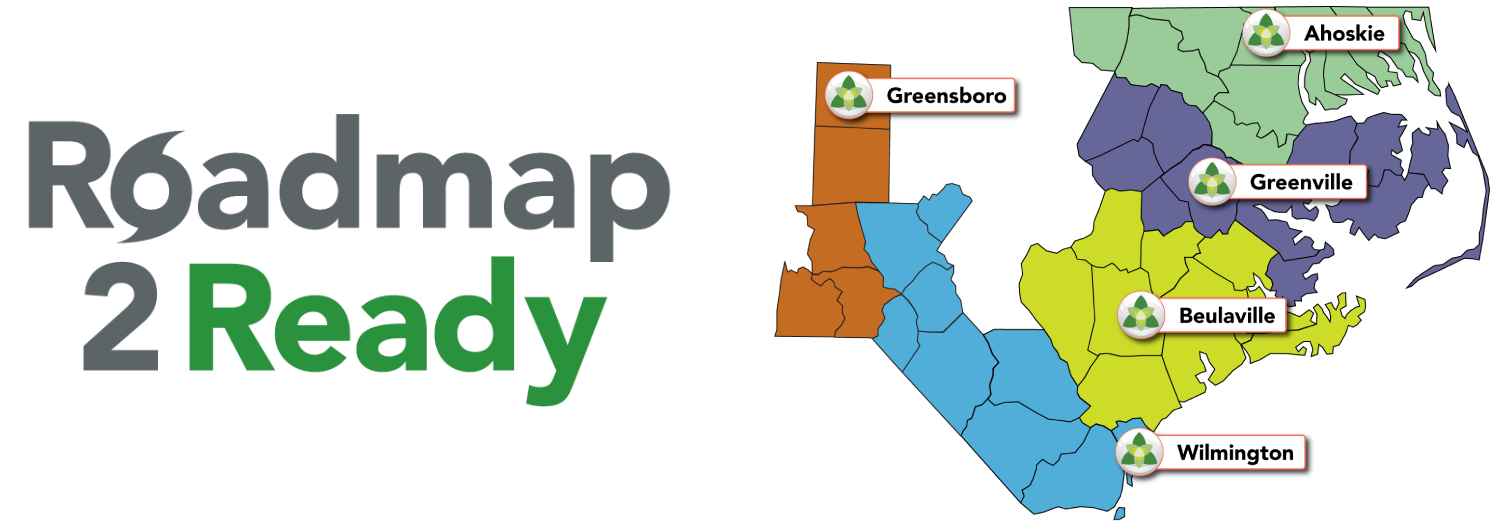
Trillium advises providers to continue monitoring tropical activity through November 30, know your risk for hurricanes, and get a kit. The time to put an emergency kit together is before a disaster. It's important to include enough water, food, and supplies in your kit for three to seven days for each person and pet. Being ready for an emergency helps you and your family and allows police, firefighters, and emergency medical workers to focus on helping others who may need it most.
Review North Carolina Emergency Management emergency kit recommendations for basic supplies, unique needs, and first aid by visiting ReadyNC.gov.
Provider My Learning Campus Reminder
To find updated and current Provider Trainings, please visit: Provider My Learning Campus or this list of provider trainings.
NEED TO REPORT FRAUD, WASTE AND ABUSE?
EthicsPoint is a secure and confidential system available 24 hours a day, 7 days a week for anyone to report suspected violations of potential fraud, waste and abuse, or confidentiality issues. You can access EthicsPoint through website submission at EthicsPoint - Trillium Health Resources or by calling toll-free: 1-855-659-7660.